

Table of Contents
Hip Dips Itu Apa? Understanding Your Body’s Natural Blueprint
If you’ve searched for “hip dips itu apa”, you’ve likely noticed gentle inward curves between your hips and thighs and wondered about them. You’re not alone. This concern has become a common topic, often clouded by misinformation.
Let’s start with the most important fact: Hip dips are a completely normal, natural part of human skeletal anatomy. They are not a flaw, a problem to be solved, or an indicator of your health or fitness level. As someone dedicated to researching and writing about body science and positive self-image, I see the confusion this topic generates.
This guide will provide a clear, science-based explanation of what hip dips are, why they occur, and empower you with a healthier perspective. My goal is to replace anxiety with understanding and appreciation for your unique body.
Hip Dips Itu Apa? The Simple Anatomical Definition
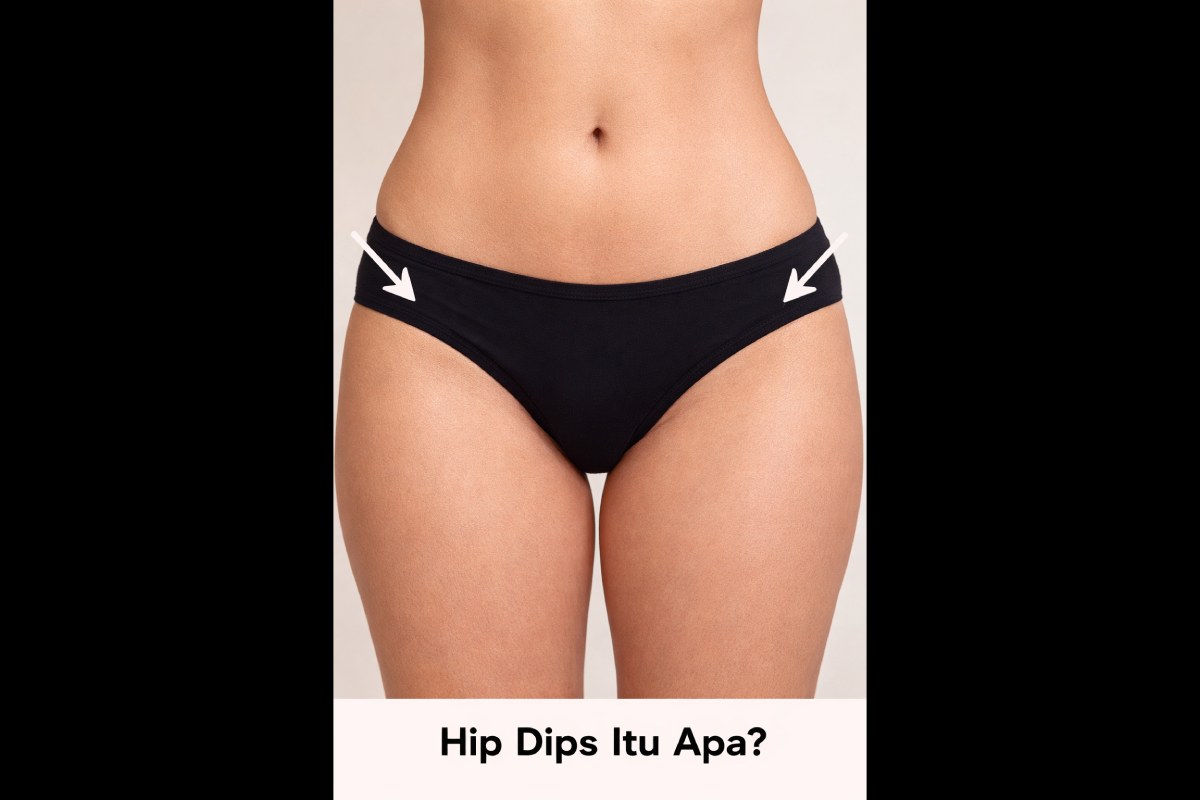
In straightforward terms, hip dips (clinically called trochanteric depressions or “violin hips”) are the inward curves or indentations that can occur between the hip bone (iliac crest) and the top of the thigh bone (femur).
To visualize your own anatomy:
-
Your Hip Bone (Pelvis): The high point you feel on your side is the top of your pelvis.
-
Your Greater Trochanter: This is the bony prominence at the top of your thigh bone (femur), where major leg muscles attach.
-
The Natural Dip: The space between these two bony points naturally dips inward. The visibility of this dip is determined primarily by the length and shape of your femur and pelvis, and how your muscles and fat distribute over this frame.
The key takeaway: Hip dips are about your bone structure, not a lack of muscle or fat. They are a beautiful testament to human anatomical diversity.
Apa Penyebab Hip Dips? It’s All in Your Frame
The primary cause of hip dips is your genetics and inherent bone structure. Specific factors influencing their appearance include:
-
Pelvis Width: A wider pelvis can create a longer distance between the iliac crest and femur, making the dip more pronounced.
-
Femur Neck Angle and Length: The angle at which your femur connects to your hip socket determines the position of the greater trochanter.
-
Muscle Insertion Points: Where your gluteus medius and tensor fasciae latae (TFL) muscles attach to the bone influences the soft tissue contour in this area.
-
Natural Fat Distribution: Everyone has a unique fat distribution pattern. Some people naturally store less subcutaneous fat over the trochanteric region.
It is crucial to understand: Having or not having hip dips has NO correlation with your fitness, health, or strength. Even elite athletes often have visible hip dips.
Hip Dips vs. “Shelf Hips”: A Matter of Bone Structure
The so-called “ideal” or “shelf hips” often shown in media depict a smooth, rounded contour from the waist to the thighs with no inward curve.
The difference is fundamentally skeletal. Individuals with this shape typically have a shorter distance between their iliac crest and greater trochanter, or a femur that sits higher. This is simply a natural variation, not a superior one.
Can You Get Rid of Hip Dips? Separating Fact from Fiction
This is the core question, and the answer must be clear and based on anatomical reality:
You CANNOT eliminate hip dips through exercise, diet, or topical treatments. Why? Because their origin is your bone structure. You cannot change the fundamental shape of your skeleton through workout routines.
However, you can modestly influence their appearance by focusing on two areas:
-
Building Gluteus Medius and Maximus Muscles: Targeted strength training (like hip thrusts, glute bridges, and lateral band walks) can build muscle mass in the upper and side portions of your glutes. More developed muscles can create a fuller look around the bone, potentially making the dip appear softer.
-
Overall Body Fat Percentage: If you have higher body fat, losing fat healthily may change distribution patterns, which can also alter the area’s appearance.
CRITICAL WARNING About Dangerous Claims:
-
“Hip dip workouts” are a myth. Any program claiming to “erase” them is misleading you about human anatomy.
-
Spot reduction is impossible. You cannot lose fat from one specific area by targeting it.
-
Only cosmetic procedures like fat grafting (BBL-lite) or implants can significantly alter this contour. These are major decisions with associated costs, risks, and recovery times.
A Healthy Mindset: Embracing Body Diversity
I want to conclude by reframing how you see hip dips:
-
They Are the Norm: The majority of people have them. They are just less visible in posed, edited, or angled social media photos.
-
They Are Not a Health Metric: Your bone shape does not determine your worth or wellness.
-
Focus on Function, Not Just Form: Shift your energy to building a strong, capable, and healthy body that serves you well.
-
Wear Clothes That Make You Feel Confident: If you feel self-conscious, high-waisted pants, A-line skirts, or dresses that follow your natural silhouette can help you feel great. This is about comfort, not “hiding a flaw.”
Conclusion: Answering “Hip Dips Itu Apa?” Once and For All
Hip dips are the natural inward curves determined by the shape and alignment of your pelvis and femur. They are a normal anatomical variation, much like the shape of your nose or the length of your torso.
Instead of spending energy fighting your body’s blueprint, I encourage you to:
-
Acknowledge this as part of your unique frame.
-
Focus on holistic strength and health for how it makes you feel.
-
Appreciate your body for all it allows you to do every day.
Your body is your home. Understanding the answer to “hip dips itu apa” is the first step toward living in that home with respect and kindness, not criticism.