

Wellness centers carry a particular operational challenge that retail businesses and straightforward service businesses don’t face in the same combination. The product is an experience — one that depends on timing, environment, practitioner skill, and client comfort all working together — and the business behind that experience involves booking complexity, practitioner scheduling, product inventory, membership management, and client records that need to stay accurate across many visits and multiple staff members.
Managing all of that through a combination of manual processes and disconnected tools works up to a point, and then stops working in ways that show up in the client experience. Scheduling errors that create friction before a treatment even begins. Inventory surprises that interrupt service delivery. Client preferences recorded in one place that aren’t visible to the practitioner working with them that day. These failures don’t usually happen because the team isn’t trying — they happen because the infrastructure can’t support the coordination that a growing wellness center actually requires.
Table of Contents
Scheduling That Handles Real Complexity
Spa and wellness scheduling isn’t a simple appointment grid. A single booking might involve multiple practitioners in sequence, specific treatment rooms, equipment that has its own availability constraints, and preparation or cleanup time between clients that has to be built into the schedule without being visible as bookable time to clients or staff.
Manual scheduling systems handle simple bookings adequately and more complex ones poorly — the errors and collisions that occur when multiple constraints have to be satisfied simultaneously tend to increase with the complexity of the booking rather than scaling linearly with volume. Purpose-built scheduling software manages those constraints automatically, surfacing only the genuinely available combinations rather than requiring a human to hold the full constraint picture in their head while making a booking decision.
Automated confirmation and reminder messages that go out at defined intervals before an appointment reduce no-shows without requiring anyone to manually track which clients need to be contacted. For a wellness center where a cancelled appointment leaves a practitioner with unproductive time that can’t be filled at short notice, the reduction in no-show rate that automated reminders produce translates directly into revenue protection.
Client Records That Travel With the Client
A wellness client who visits regularly accumulates a history that should be accessible to whoever is working with them on any given day — treatment preferences, products used previously and how they responded, health intake information that affects what services are appropriate, notes from previous visits that allow for continuity of care across different practitioners.
When that history lives in a paper file, or in the memory of whichever staff member has worked with the client most often, it’s vulnerable to gaps whenever circumstances change. A new staff member, a practitioner absence, a busy day where nobody had time to pull the file — these situations expose the client to a less personalized experience than they’ve come to expect, which affects retention in ways that are difficult to trace directly but very real.
STX Software, used across a range of spa and salon environments, maintains client profiles that follow the client through every interaction — updating automatically as services are completed, products are purchased, and preferences are noted — and making that information accessible to any staff member preparing to work with that client regardless of who’s seen them before. That continuity is one of the more significant contributions integrated software makes to the quality of client experience at scale.
Retail and Inventory Integration
Most wellness centers carry retail product alongside their service offering, and the inventory management challenges that come with it — knowing what’s in stock, what’s being used in treatments versus what’s available for retail sale, when to reorder, which products are moving and which are sitting — are difficult to manage accurately without a system that tracks product movement in real time.
Manual inventory counts that happen periodically are always backward-looking by the time they’re done, and the errors they miss tend to show up as either stockouts that disrupt service delivery or overstock that ties up cash in slow-moving product. Automated tracking that updates with every service and retail transaction gives the business a current picture rather than a historical one, which changes the quality of purchasing and pricing decisions in ways that compound over time.
Membership and Package Tracking
Many wellness centers generate significant revenue through membership models and package sales — recurring billing, bundled service credits, loyalty programs that reward repeat visits. Tracking all of that accurately for a client base of any size through manual records is error-prone in ways that create both operational problems and client relationship problems when discrepancies surface.
Automated tracking that records package usage with every appointment, manages membership billing without manual intervention, and alerts clients and staff when a package is running low removes a category of administrative error that tends to generate friction exactly when client loyalty is most valuable to protect.
The Operational Picture That Changes Decisions
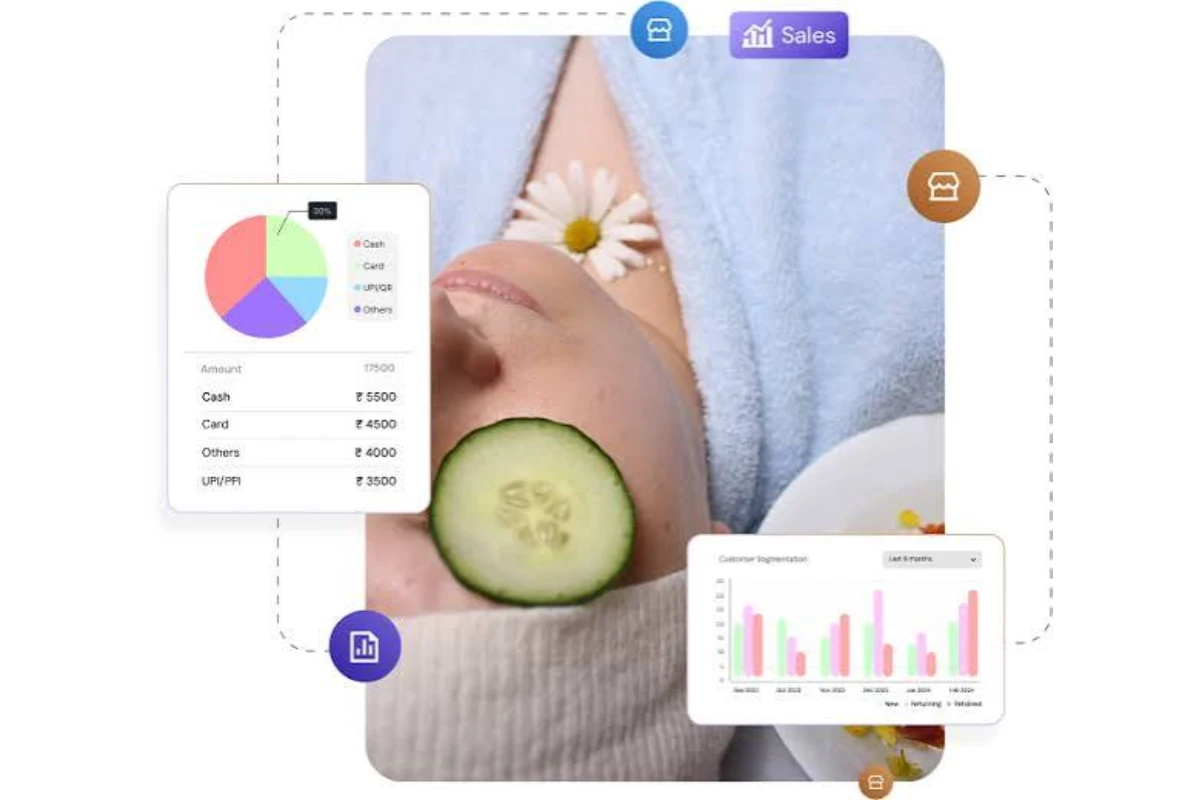
Business reporting that draws from integrated operational data rather than manual aggregation gives wellness center operators something most smaller operations don’t have — a current, accurate picture of what’s actually happening in the business. Which services are most profitable, which practitioners are fully booked and which have available capacity, which time slots consistently underperform, which retail categories are turning over well.
Those questions have answers that intuition approximates and data clarifies, and the decisions they inform affect the business in ways that compound over time in the direction of better operational outcomes.